Tuesday, July 06, 2010


Wednesday, June 23, 2010
Moving from Blogger to Wordpress
Hello everyone--I'm in the process of moving from Blogger to Wordpress (and trying to keep all my permalinks). This blog will continue to be hosted at spooksbyme.org, but there might be a period of a day or two when the blog is down. No doubt you'll be able to survive, but I thought I'd let you all know!
Friday, June 18, 2010
I'll be in the Bay Area this Saturday and Sunday!
The (New) Reading Series at 21 Grand Presents...
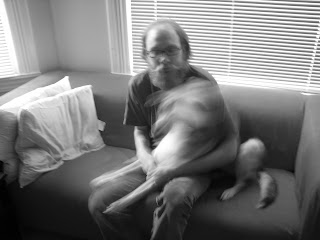 Jeffrey Schrader’s newest book is Art Fraud (BlazeVOX 2010). This summer his newest work will be gridpattern (www.ErgArts.com). He has previous work in a handful of diy journals & websites. He has some older chapbooks. He’s worked as a factory employee, an outdoor adventure guide for young, urban troublemakers, an arts academy teacher, a bike messenger, a student, an archivist, a recipient of unemployment benefits, and an accountant. He does not blog, but enjoys reading yours. He has occasionally helped out with The Uglyman Collective, Another Thing Books, and (currently) Cricket Online Review. He presently lives in Oakland, CA, but he won’t live there forever. He has received no grants or awards.
 K. Lorraine Graham is a writer and visual artist. She is the author of Terminal Humming (Edge Books, 2009) and several chapbooks, including Large Waves to Large Obstacles, forthcoming from Take-Home Project. Her work has appeared or is forthcoming in Traffic, Area Sneaks, Foursquare and elsewhere. She currently lives in southern California with her partner, Mark Wallace, and Lester Young, a pacific parrotlet.
Jeffrey Schrader & K. Lorraine Graham
Sunday, June 20, 2010
6:30 pm, Admission 5 USD
@ 21 Grand, 416 25th Street, Oakland
Jeffrey Schrader’s newest book is Art Fraud (BlazeVOX 2010). This summer his newest work will be gridpattern (www.ErgArts.com). He has previous work in a handful of diy journals & websites. He has some older chapbooks. He’s worked as a factory employee, an outdoor adventure guide for young, urban troublemakers, an arts academy teacher, a bike messenger, a student, an archivist, a recipient of unemployment benefits, and an accountant. He does not blog, but enjoys reading yours. He has occasionally helped out with The Uglyman Collective, Another Thing Books, and (currently) Cricket Online Review. He presently lives in Oakland, CA, but he won’t live there forever. He has received no grants or awards.K. Lorraine Graham is a writer and visual artist. She is the author of Terminal Humming (Edge Books, 2009) and several chapbooks, including Large Waves to Large Obstacles, forthcoming from Take-Home Project. Her work has appeared or is forthcoming in Traffic, Area Sneaks, Foursquare and elsewhere. She currently lives in southern California with her partner, Mark Wallace, and Lester Young, a pacific parrotlet.Monday, June 14, 2010
Daily

I've been sucked into facebookland conversations about the Rethinking Poetics Conference. If I lived closer to New York or actually had some kind of academic job that required me to go to such conferences or if I'd been invited or if tickets to New York were really cheap and I'd had a place to stay, I might have gone. Conferences are all slightly doomed. If I ever get to/have to throw a poetry conference, it would be 1) interdisciplinary 2) mix readings/performance/art with critical discussion 3) have time for dancing and parties 4) have good food available--either on site or easily accessible off-site 5) there should be at least one good bar nearby, and preferably several 6) there should be some time for sleeping in and some time for napping.
Now that I think of it, both Post Moot I and II as well as Positions were pretty close to fulfilling all of my criteria. And Press was fun, too. I think it's also notable that Post Moot and Positions didn't call themselves conferences. Post Moot was a "convocation" and Positions was a "colloquium." What about festivals? I know the word "festival" brings up, perhaps, images of people dancing around in the California wilderness, wearing motley, and juggling--but hey, a lot of those motley-wearing jugglers are my friends, and they often throw good parties. I mean, if I had the funds to spare, I'd definitely be going to at least Wanderlust and Burning Man this year.
Enough of that. Mark and I ate the last of the apricot-blackberry tart I made for my birthday, and it was delicious. Otherwise, I've been eating a lot of strawberries. I also made a killer roasted-potato salad with corn (also roasted), zucchini, red onion, green beans and tomatoes. Dressing was made of of tarragon, apple-cider vinegar, mustard, olive oil, hot sauce, etc. Yum.
On Sunday, I managed to get into a full version of Eka Pada Rajakapotasana, with both hands and my head on my foot. Here's a picture of what the full pose looks like for those of you who aren't yogis. Of course, my hips weren't perfectly square or perfectly on the ground, but still, moments of physical opening like that make me hopeful
What else? I did decide to get a pair of Toms. Gold ones.
Wednesday, June 09, 2010
Post Moot 2010: Day 1

Mark and I arrived just as the Flarf & friends reading was getting started--so we missed all of the morning's events. I was already in overwhelmed mode. What I mean is that I miss the poetry world a lot here in
I didn’t read first, but I’ll describe my reading to get that description out of the way. Because I was suddenly hyper and manic, I was also rather nervous. And I hadn’t had time to put on any make up. So that’s the first thing I did when I got on stage—powder and mascara, which I smudged all over my left eye because my hand was shaking. Performing my own nervousness or needs onstage (for make up, for dancing, for a drink of whiskey, for a comforting stuffed animal) is something I’ve been playing with for a while. It doesn’t make me less nervous, but it does ground me and help me move from the world of my own weirdness to a world of staged public weirdness. I the long poem from Terminal Humming about the “standard government tortured dictator forced to lick boots.” I don’t read it out loud very often, because it’s creepy and not the kind of funny that people laugh at much. But in this particular context, that was good. I’m not going to try and complete with the kinds of laughs the audience wants to laugh when Kasey, Mel, Rod and Adeena are reading. Instead, I tried to be the tense and weird contrast.
Kasey read from of his anagrams of Shakespeare’s sonnets, which, yes, do retain meter and rhyme. I think of the Sonnagrams as structurally conceptual and tonally flarfy. They play with the idea of sonnet as political and social commentary, sometimes through direct address of other writers.
Mel read a variety of pieces, including “Superpoke” and the one I love about Jesus and pimp handshakes. I haven’t had many chances to hear Mel read since I left DC, but I feel like there’s something new (to me) about her use of dynamics and timing—a sophisticated sense of the various performative arcs of the poems, of how the audience is reacting, and how to really work the tension between those two things. And her dress was gorgeous.
Monica Moody mentioned “Adeena Karasick’s preternatural and sexy verbal fireworks” in her post on the Post Moot blog; I think it’s an apt description of Adeena’s poems and performance style. Layered, sexy. Adeena’s poems contain aural & connotative linguistic chain reactions which, to me, feel like they could keep going until they include all of language, given time and space.

“Rod’s Flarf poems make me cry.” That’s what I wrote in my notes. Nothing about which specific poems he read. Grover’s bottom? Voting machine poems? Later, when I write about Rod’s other reading, I’ll talk about what I consider to be his flexible tonal range.

After the reading, I was very ready for some wine, and so glad to head over to the Miami Inn for drinks and more readings. Laura Moriarty and Carla Harryman gave brief readings (more about their work later when I write on their longer performances), and Tom Orange played saxophone. I pretty sure we talked about Pee Wee Russell at some point during the evening.
Mark and I snuck out at around midnight to get a reasonable night’s sleep so that we could be in good form tomorrow morning for the 9am (6am our time) panel/performance.
Tuesday, June 08, 2010
"I" "Am" Still "Here"

- Spring quarter at UCSD is finished. Which means my first year of my second time in graduate school is finished.
- I am reading in Oakland on June 20 with Jeffrey Schrader at The (New) Reading Series at 21 Grand. I will remind you of this next week.
- My birthday is this Friday, June 11.
- I did type up my notes from Post Moot, but they are not even in a bloggable format.
- Most of you have, by now, seen my Post Moot Photo Set on Flickr.
- I'm working on a prose piece about Papua New Guinea, fruit, mining, and manifest destiny. The whole project creeps me out.
- Also still working on my "White Girl" project, which now includes many footnotes.
- I've been hooping more again, and it feels good.
Friday, May 14, 2010
Friday Lester (On Hoola Hoop in Sepia) / How can my blog be treated as a serious poetry blog if I continue to post pictures of Lester the Parrot?
e real question is this: why doesn't Lester get more fan mail?

 Although Lester would like his own blog, "The Daily Lester," I think that Friday Lester is enough.

Subscribe to:
Posts (Atom)