Showing posts with label Modernism. Show all posts

Monday, November 02, 2009

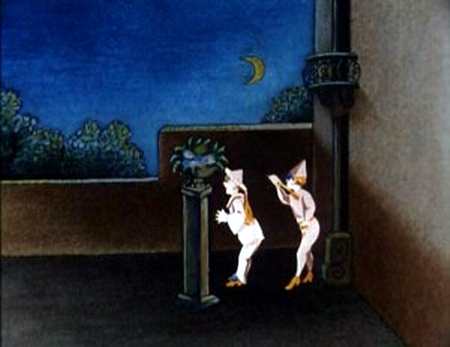
Pauvre Pierrot


It's been a while since I've blogged. Blame work, school, and a bike accident that wasn't but could have been very nasty. I have some fabulous bruises, but that's all.

This morning I've been reading Rachel Zolf's blog The Tolerance Project, a collaborative writing project with eighty writers, artists, and thinkers from across Canada and the United States. Rachel is the author of Human Resources, and winner of the 2008 Trillium Book Award for Poetry. So, why is she in an MFA program? Rachel Zolf is Canadian, and when her female partner got a tenure-track job at a university in the USA, she was not able to legally move with her to New York because their relationship is not legally recognized by US immigration authorities. Becoming a student was really her only other option for obtaining a visa. In her Statement to MFA Workshop October 13, she writes:
...what is most important for my project is that it is a collaborative take on the MFA as an institution within larger state apparatuses. That is the key concept behind my project, a deconstruction of how “authors” and “voices” are created through the process of the MFA, linked with how difference is “tolerated” (or not) in general in the US. I wanted to provoke a look at how the MFA works as a process, by deliberately blowing up the authorial creation and feedback process beyond this room. There is a long tradition in the art world of looking at the workings of art institutions such as art museums and art collecting practices and the creation of the artist as a commodity.
If Carolyn Forche had been more present at George Mason and they'd had more funding for me, I might have gone there instead of doing an MA at Georgetown. In fact, I think my critique of MFA programs only became fully developed when I left the east coast and found that not even community colleges wanted to hire me to teach. On the east coast, no one cared that I didn't have an MFA. Most of the major east coast cities have active poetry and arts communities that aren't centered on MFA programs. In other words, I don't think I was fully aware of the degree to which MFA programs were becoming the norm and the ways in which creative writing is professionalized in the US.

I suspect that the farther you get from the city in the US, the more likely MFA programs and educational institutions will be central to art communities. That's an undeveloped argument, I know. But where are the poets going to hang out if you have to drive to the bar? You hang out at school, I guess. Some one give me counter examples.

I'm taking a brief break from typing up my comments to the other people in my poetry workshop--I'm still irritated by the way submitting individual poems to workshop really discourages things like abrupt tonal shifts and strange juxtapositions. I fall into descriptions: this poem is doing this here and that there, that poem is doing that there and this here. I look for strangeness and moments of disorientation. I ask about other poems and refer to previous poems and try to extend the context of the poem as far beyond the workshop as I can. I don't like how workshopping encourages writing for workshopping.

I do like having an immediate group of readers. That's nice. Everyone in my class is intelligent, thoughtful and creative. But more feedback doesn't equal better feedback. Just like after every reading I give there's almost always a woman who is slightly older that me whom I've never met who wants to give me a lot of specific suggestions about the pace of my reading, my clothing, and how I need to learn to breathe differently. I know that my feedback on other people's work has as much to do with me as it does to do with their poems. Obviously.

I am enjoying all the reading and discussion that I'm doing for both the workshop and the other seminar on Modernist aesthetics and art movements. I'm remembering things that I like, reading things I've read, reading a lot of things I haven't read. In some cases, I'm evaluating my relationship to things that I respected but thought I wasn't that interested in.

Example: it turns out that I might actually be more excited by Fanny Howe's work than I previously thought.

Example: now that I've had to read some more Donald Revell, I can be much more articulate about why I really dislike it.

Example: I've never written about Modernist theater or performance. In fact, out of all the major a-g Modernist, I've probably read Artaud and Beckett the least. It's exciting, then, to read them and others and think about a genre that I haven't thought much about.

When I was doing my MA at Georgetown, I felt pressured to make every seminar paper full of amazingly brilliant critical insight that would somehow be relevant to the field. Now I don't mind if I use my term paper as an excuse to think about and learn about things that I want to think about and learn about. I don't care so much about the field. If I have any academic career ahead of me at all, which is doubtful, it's certainly not going to be based on my ability to write normative academic articles. So, in the meantime, I get to read Artaud and Beckett. I get to think about Jacques Copeau and the Théâtre du Vieux-Colombier, especially the years it was in New York, and also Charles Dullin. How Artaud's name comes up constantly in the work of the artists and actors who were busy reviving/changing/rejecting pantomime and thinking about a more physical theater centered on actors and gesture.

Wednesday, May 14, 2008

Laura Glenum's Hounds of No


We're in the midst of a slight heat wave here on the coast. The guy I buy bread from at the farmer's market told me he thinks the strange weather is a sign of the End of Days, and also of global warming. "It's never colder in Escondido than it is in Carlsbad," he said. I told him that when the oil runs out and the apocalypse comes, I'll be in good shape with my bicycle. He laughed and said that I could ride up into the clouds and away from the horsemen.

So, in light of that discussion about the apocolypse, I thought I'd post my reading notes about Laura Glenum's The Hounds of No. Again, these are reading notes, not a full-fledged review. It will take several days to weed out the typos. I find that when I think "review" I'm unable to say anything useful. So, I write "notes" which later become "essays" or "reviews." So, on to the notes:

I've now actually read Laura Glenum's The Hounds of No (instead of just looking at it and reading every other poem and then skipping to the back to read the end). I really want to like this book. In theory, it's got everything I love:

macular holes, mucus, aliens, pigs, corpses, ovaries, aborted fetuses, sperm, aliens taking over bodies and exploding (again, with lots of mucus), bodies that explode (even without being surrogate alien parents), insects, S&M, parts of bodies (both human and non-human), doll houses, museums, dioramas, tableaux, Victorian wigs...

And more.

This book resonates with all the Modernist literature most dear to me: Mina Loy's "Pig cupid rooting his rosy snout in erotic garbage," for example, or practically every love affair in Djuna Barnes Nightwood. Maybe even H.D's Nights for it's masochistic and symbolic order that finally doesn't lead anywhere definite--"Two straight lines run into infinity." There's even a bit of Breton's Nadja here, although she shows up as something like an exploded mannequin, and the trail left by her plastic body parts doesn't lead any where sacred (even in a profane way).

I like the camp in this book, I appreciate the very obvious critique of female objectification, I like the fact that Glenum seems to care about what both Freud and Lacan have to say about the world (I think this is the first book I've read that quotes from Dora) and is able to critique them without shunning them completely.

In short, this book has many of the concerns of the Feminist avant-garde Modernists I mentioned above, and also New Narrative (There's a lot to unpack in that statement.)

And yet I'm not howling with ecstasy. Which puzzles me. Hounds of No is working with concerns with which I am, um, deeply concerned, but it also feels very familiar. Point #6 of Glenum's "Manifesto of the Anti-Real," is this:

"To be Anti-Real is not to be Surreal. The achievement of Surrealism lies in displacing correspondences, in the poem not arriving. In the Anti-Real, all assumptions are disabled, too, with one difference: the Anti-Real displaces causal logic with a totalizing logic of violence."

Sound's good. But Surrealism is interested in violence, too. Comte de Lautréamont's Les Chants de Maldoror is all about violence (and evil, and grotesque bodies, and how when you push these things far enough they become strangely beautiful and, dare I say, sacred), n'est pas? Although I guess he was really pre-Surrealist; they claimed him posthumously, right? I suppose pushing profanity until it becomes holy is a kind of arrival. And the heroine in H.D's Night does arrive at the bottom of a frozen lake, but the text doesn't have anything grand to say about it, except for the fact that the suicide is annoying and puzzling for everyone else still alive, so the text opens up again without arrival.

Surrealism isn't Feminist, of course. In many Surrealist poems, women are sacred entry points to the divine (often very literally) or guides to the mysteries of the universe. They show up naked in the woods at night, or they are lovers like Nadja who embody all that is mysterious, dark, violent (and, you guessed it, sacred) about the night cityscape. A cunt is great as long as it's imaginary. It's been a while since I looked, ahem, at Louis Aragon’s Le Con D’Irene, but still.

Ok. So I like The Hounds of No, but it's finally a little too neat for me to love it. The poems know their contexts--the grotesque, Christianity (which I haven't discussed), Surrealism and psychoanalysis and Feminist critiques of both, nods to critiques of post 9/11 politics--but I'm not sure the language went far enough for me. Let me try to be specific. The moves are really good, but they felt familiar. I keep thinking about Kathy Acker's Kathy Goes to Haiti :

"Is he your husband."
"No. I don't have a husband."
"Listen, you don't understand how things are in Haiti. Women in Haiti don't go around alone."
"What about the women who aren't married. Are there any women who aren't married?"
"They live with their families."
"It's not like that in the United States."
"You can't go to Jacmel alone. You have to have a boyfriend."
"But I don't want a boyfriend. I want to be alone."
"If you don't have a boyfriend, the driver of the Jeep'll become your boyfriend."
"You mean he'll rape me?"
"No. No. There is no violence in Haiti. Anybody can do anything they want in Haiti."

There's nothing formally crazy about that passage, and it's not fair to compare poetry to fiction, maybe, but that passage is super creepy and funny and it plays will all kinds of familiar problematic racial and gender stereotypes and fantasies. The last line makes me laugh and leap out of my skin. I'm not leaping out of my skin with Hounds of No. Maybe because its form creates distance between the reader and the text, and it does so on purpose. And "distance" isn't a code word for saying "it is experimental and uses enjambment and disjunction etc," although it does all of those things and I like all of those things. It's probably more of a code word for "performance," something else I like, especially when thinking about gender.

That doesn't quite describe what I mean when I say that Hounds of No is a bit familiar and that the language was good but didn't go far enough. But I'll have to stop here. I need to eat an early dinner so that I'm not sluggish during yoga this evening.

Maybe part of the problem is that I wasn't raised as a Christian--I've never even been baptized. I enjoyed the performance in Hounds of No, but I think I'd like to feel more threatened by it.